

Designed around the patient.
A private residential setting with space for quiet, nature, movement, and attentive care.
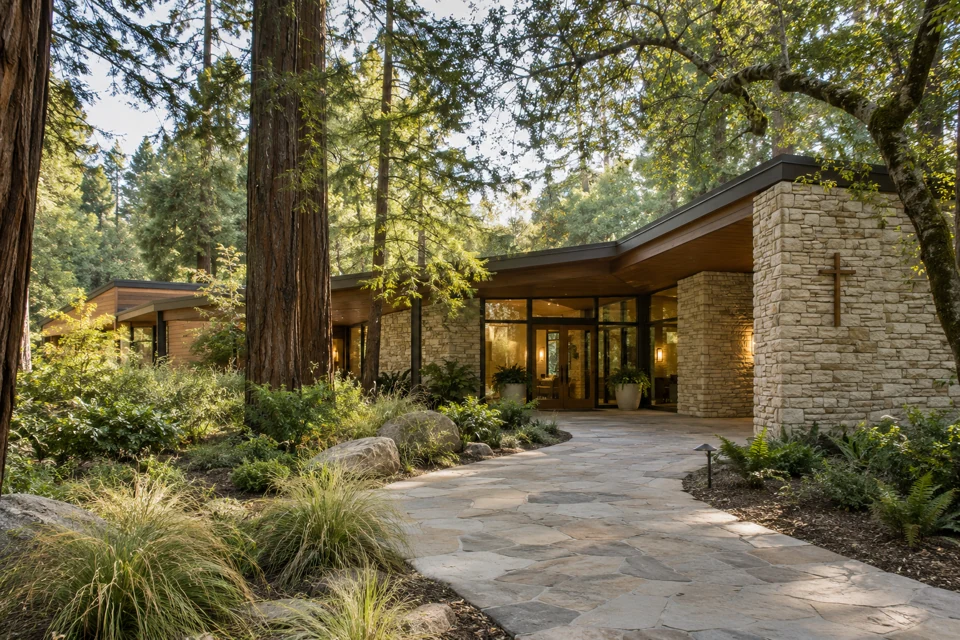
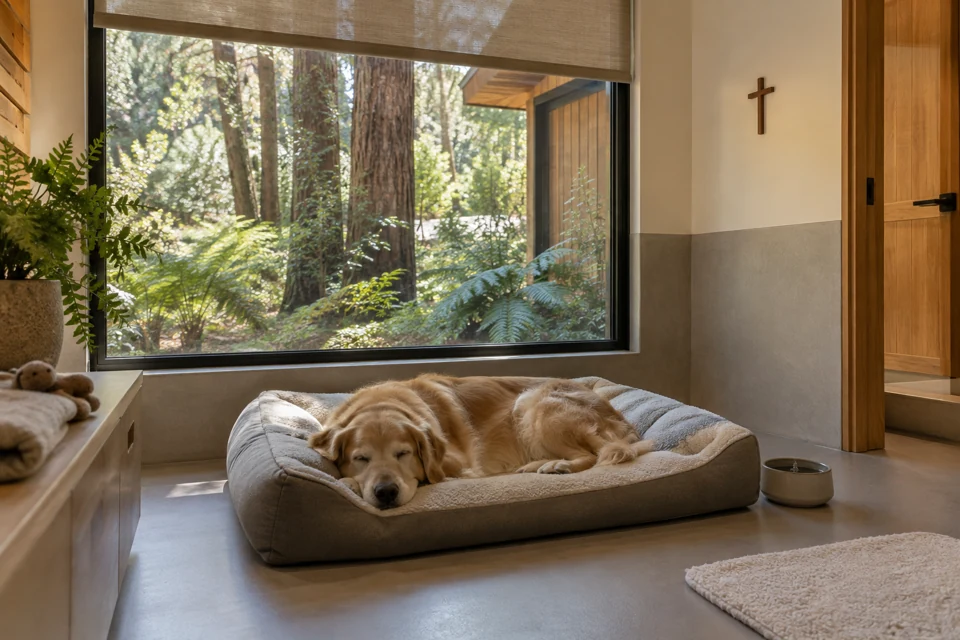
The residential spaces.
Patient suites support rest, enrichment, attentive observation, and a stable daily routine. Housing and daily activity reflect species, mobility, temperament, and clinical needs.
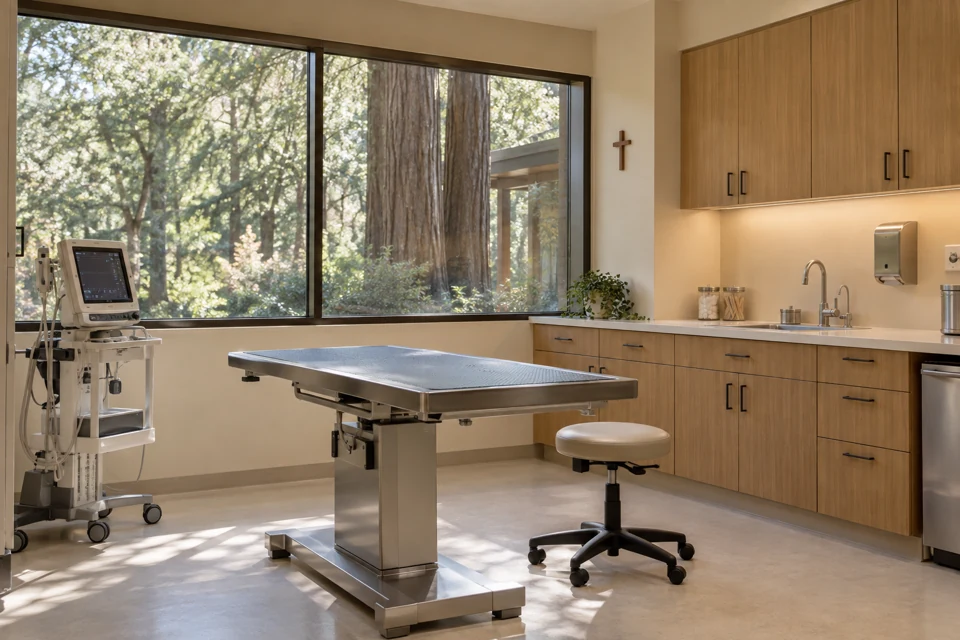
The clinical environment.
Veterinary treatment areas, clinical monitoring, laboratory work, medication management, and diagnostic imaging coordination form the clinical side of the campus.
The nutrition kitchen.
Food preparation is part of patient care. Nutrition management considers the clinical picture, appetite, body condition, food tolerance, and the daily course of the program.
Movement and rehabilitation.
Walking routes and rehabilitation spaces support clinically appropriate activity. The pace of activity is guided by comfort, strength, and veterinary assessment.
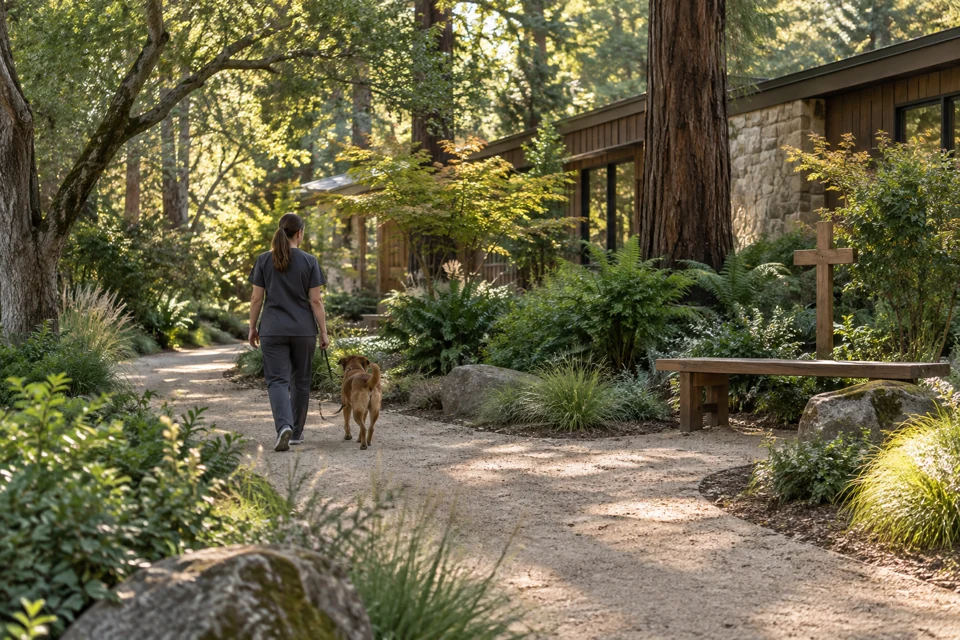
Trees, gardens, and quiet.
Outdoor gardens, natural areas, and walking paths give patients access to a calmer setting beyond the treatment room. Rest remains part of the routine.
Private by design.
The campus is for patients and staff. Family contact is maintained through scheduled communication, photographs, video, and clinical updates rather than campus visits.